Cybersecurity: More Than Protection, It’s the Core of ESG
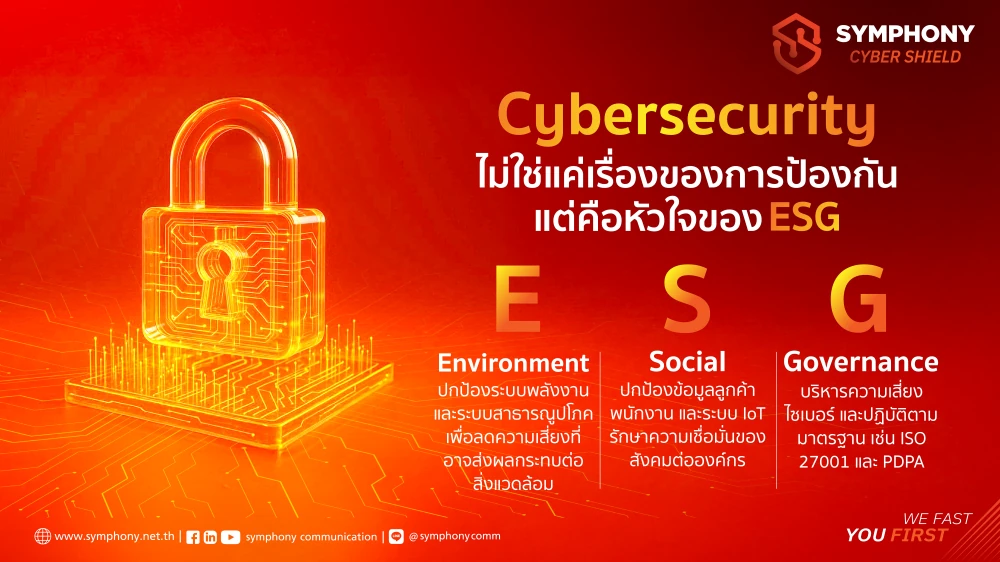
In the era of Digital Transformation, where every business and organization is driven by data and technology, cybersecurity is no longer just the responsibility of the IT department. Instead, it has become the fundamental bedrock of Sustainability. For organizations aiming to grow in alignment with ESG (Environmental, Social, and Governance) principles, here is why cybersecurity is indispensable:
E - Environment
While cybersecurity may not seem directly related to the environment, it plays a crucial indirect role. Cyber-attacks targeting industrial control systems—such as power plants, water treatment facilities, or pollution control systems—can lead to severe system failures. If these systems are compromised and cannot be recovered, it could result in large-scale environmental disasters. Therefore, maintaining a robust defense system is essential to protecting the ecosystems and the communities surrounding us.
S - Social
Responsibility toward personal data is at the heart of the "Social" dimension. Organizations must protect sensitive information from falling into the wrong hands, which could harm data owners. This includes financial records, health data, employment history, and digital services or IoT devices integrated into daily life. Vigilantly monitoring and patching vulnerabilities is vital to preventing impacts on lives and property. Ultimately, data protection is not just a technical issue; it is about maintaining Trust and ensuring the safety and security of customers, employees, and society at large.
G - Governance
Cybersecurity is central to effective and transparent corporate governance. This involves strict adherence to data protection laws (such as PDPA), international standards like ISO 27001, and other cybersecurity frameworks that ensure every process is auditable. Furthermore, organizations must establish clear cyber-risk management policies and comprehensive incident response plans—such as Emergency Response Plans (ERP) or Business Continuity Plans (BCP). These measures are critical to preventing financial loss, operational disruption, and damage to the organization’s reputation.
To achieve sustainable growth in the digital age, it is time for organizations to integrate their cybersecurity infrastructure with ESG concepts. Doing so will build stability, foster confidence, and create long-term, sustainable value for all stakeholders.
